
Overlooked Cause of Pipeline Problems?
In water and wastewater systems, trapped air is sometimes treated as a nuisance rather than a design risk. Yet many performance issues in piping systems can be traced back to inadequate air management. From startup surges to chronic headloss and premature corrosion, air is one of the most persistent — and preventable — threats to pipeline reliability.
Air enters pipelines during initial filling, releases from flowing media as pressures and temperatures change, and is drawn in during draining or power failures. Once trapped, it accumulates at high points and restrictions, reducing effective pipe area, increasing energy consumption, and creating conditions for damaging transients. Properly selected and located automatic air valves are fundamental protection devices that safeguard both system performance and long-term asset life.
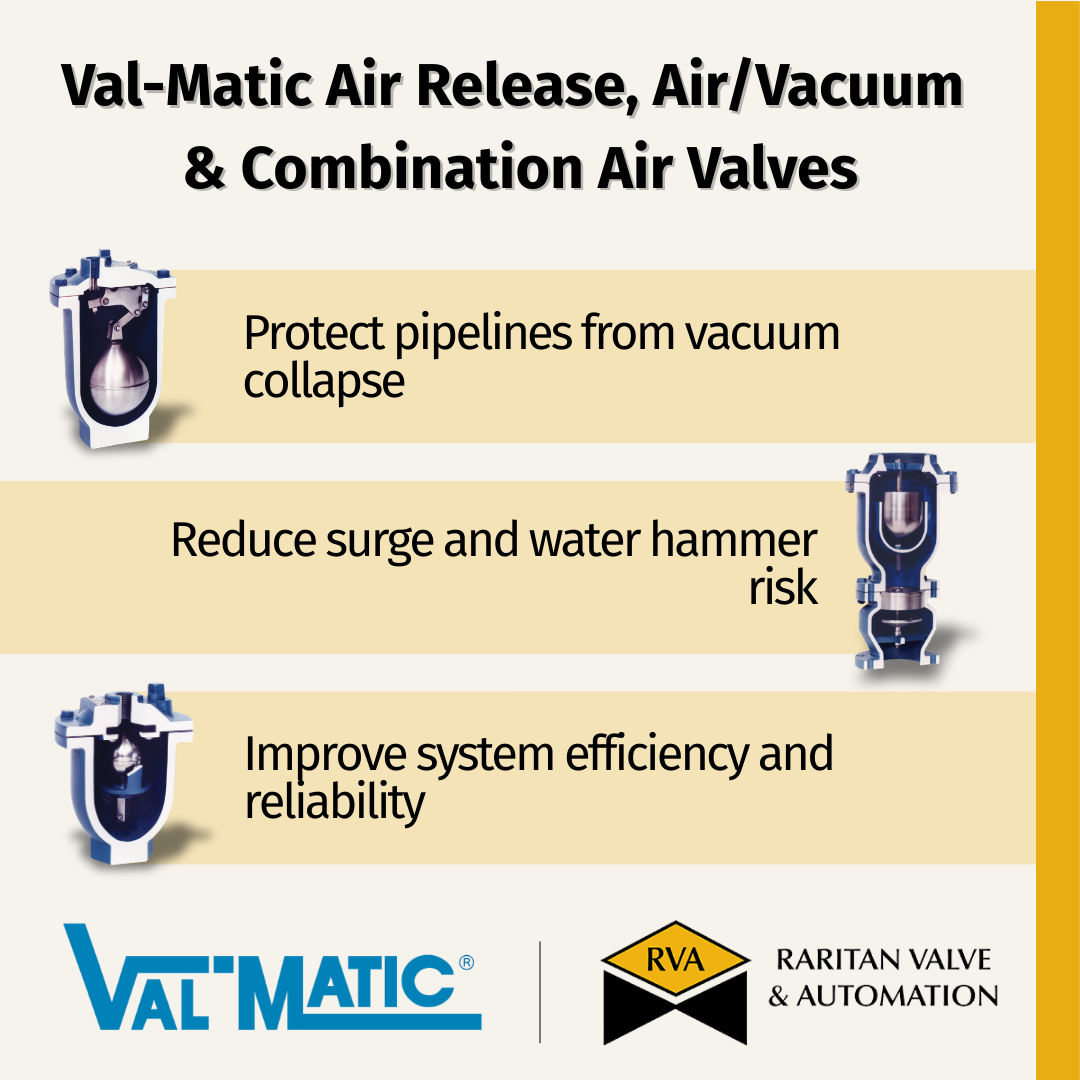
Understanding the Three Air Valve Types
Air release valves continuously vent small volumes of air while the pipeline is pressurized and operating. They use a precision orifice and float mechanism to release accumulated air pockets that form at high points, upstream of flow meters, or at changes in grade. Because their orifices are intentionally small, air release valves cannot exhaust or admit large volumes of air during filling or draining events.
Air/vacuum valves exhaust large volumes of air during pipeline filling and admit air rapidly during draining, line breaks, or power failures to prevent vacuum formation. While they protect against pipe collapse, they do not relieve accumulated air under normal operating pressure.
Combination air valves integrate both functions in a single assembly. Single-body designs combine a small air release orifice with a large air/vacuum port, while dual-body designs allow maintenance of the air release component without removing vacuum protection.
Strategic Placement: Designing for Protection
Air valve placement should follow the hydraulic profile of the pipeline, not just the physical terrain. Combination air valves are recommended at true high points, air release or combination valves along long horizontal runs, and air/vacuum valves on long ascents where vacuum conditions are likely.
Upstream of flow meters, air release valves prevent measurement errors caused by entrained air. At pump discharges, air/vacuum or combination valves equipped with slow-closing or throttling devices help control surges caused by rapid filling or column separation. Designing smooth hydraulic profiles minimizes the number of air valves required and reduces long-term maintenance risk.
Sizing Beyond Rules of Thumb
Air valve sizing depends on hydraulic conditions, not nominal pipe diameter. Air/vacuum and combination valves must be sized to admit air fast enough to prevent vacuum conditions without exceeding pipe collapse pressure or conservative differential pressure limits.
Air release valve sizing is more empirical. While water contains approximately 2 percent dissolved air by volume, actual release varies by system conditions. Selection should be guided by operating pressure, system flow rate, and manufacturer performance data to avoid chronic air binding or excessive leakage.
Materials, Compliance, and System Integration
Material selection should reflect conveyed media and operating conditions. For potable water systems, NSF/ANSI 61 and 372 certification is essential. Publicly funded projects increasingly require compliance with AIS and Build America, Buy America (BABA) provisions.
Although air valves are typically automatic devices, their performance affects pump control strategies, surge protection, and system reliability. Isolation valves, security devices, and proper vault design further protect air valve installations.
Why Air Valve Design Matters to Operations and Maintenance
Properly selected air valves reduce energy consumption by eliminating headloss caused by trapped air. They limit water hammer events that damage equipment and disrupt service. Dual-body combination designs allow maintenance without removing vacuum protection, improving safety and uptime.
Key Takeaways
– Trapped air is a leading cause of inefficiency and surging
– Each air valve type serves a distinct purpose
– Combination valves provide comprehensive protection at critical locations
– Placement should follow hydraulic profiles
– Proper sizing requires hydraulic analysis
– Compliance and material selection should be addressed early
Partner with RVA and Val-Matic for Air Valve Expertise
Air valve selection is a specialized discipline requiring hydraulic understanding and field experience. Raritan Valve & Automation partners with engineers, contractors, and operators to ensure air valves are properly specified, sized, and compliant.
For support with valve selection, submittals, or specifications, contact Raritan Valve & Automation at info@raritanvalve.com or call 732-738-3800.


